

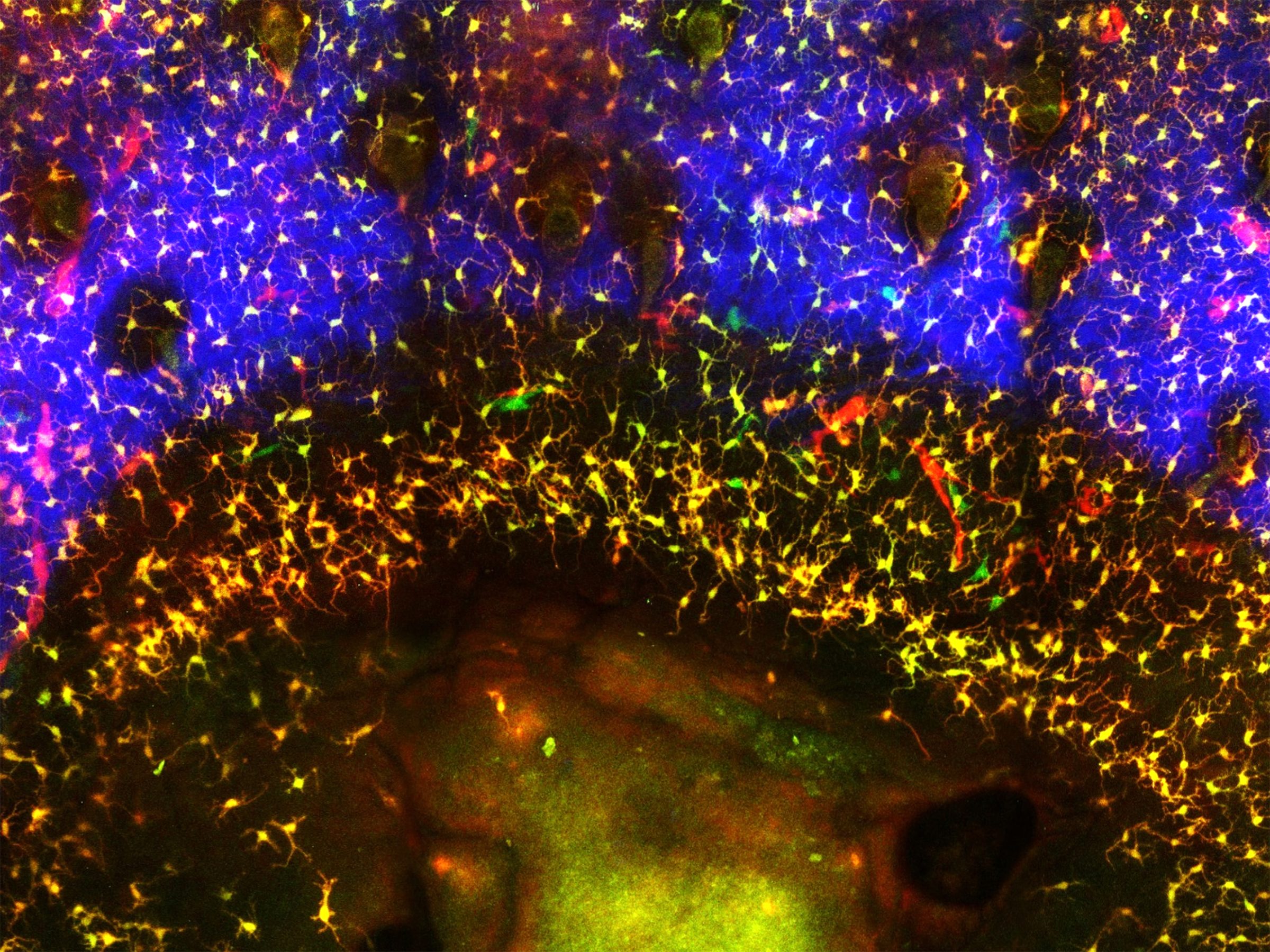
Park Lab reveals how Langerhans cells from different origins work together to restore the skin’s defenses
The skin is our first line of defense against the outside world. Its outermost layer, the epidermis, acts as both a physical shield and a home for immune cells that constantly watch for injury and infection. When the skin is wounded, both defenses are disrupted. During wound healing, epithelial cells rebuild the skin’s physical barrier, but how the immune barrier is restored remains unclear.
Using advanced live imaging, long-term cell tracking and single-cell RNA sequencing, the Park Lab at Michigan State University followed Langerhans cells throughout the wound-healing process. The study shows that these immune cells can come from different origins and work together to restore immune protection after injury.
During the early stages of wound healing, embryonic Langerhans cells, which are resident immune cells already present in the skin, move from the area surrounding the wound into the newly forming epidermis. Instead of leaving the skin, as they often do during an immune response, these cells stay in the epidermis and move toward the damaged area, helping provide early immune protection. The researchers identified CXCR2 as a new signal that helps guide embryonic Langerhans cells toward the wound. This pathway is distinct from the one Langerhans cells use to travel to lymph nodes.
Later in the healing process, monocytes from the bloodstream enter the wounded skin and develop into monocyte-derived Langerhans cells. These newly formed Langerhans cells become part of the repaired immune network and persist in the skin long term. When CXCR2 was blocked, fewer embryonic Langerhans cells reached the wound. However, more monocyte-derived Langerhans cells appeared in the repaired skin, suggesting that they can compensate for the reduced contribution of embryonic Langerhans cells and help maintain the immune barrier.
Together, the findings reveal a flexible repair system in which Langerhans cells from two different origins work together — and can compensate for one another — to rebuild the skin’s immune barrier after injury. The work provides new insight into how the skin recovers after damage and may help guide future studies of chronic wounds and inflammatory skin diseases.
See link below for Dr. Park’s latest publication from Advanced Science.
Dual Lineages of Langerhans Cells Cooperate to Restore the Immune Barrier after Skin Injury
https://advanced.onlinelibrary.wiley.com/doi/10.1002/advs.76816